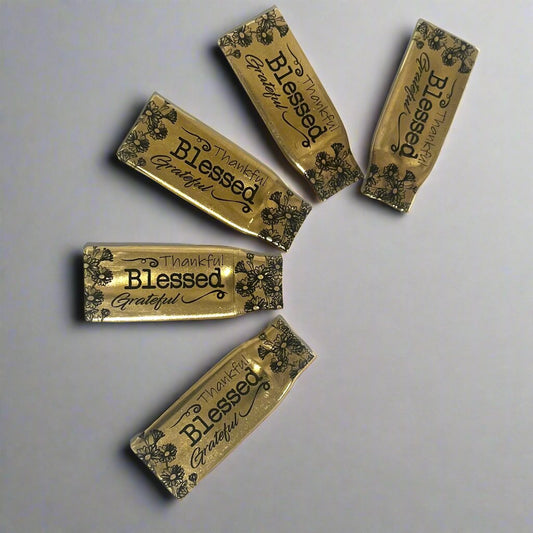
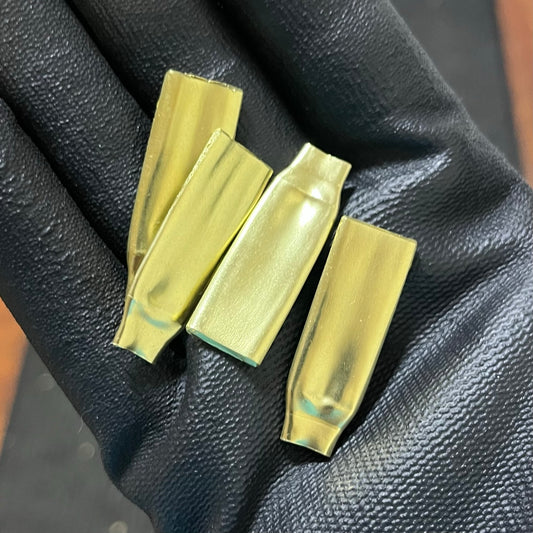
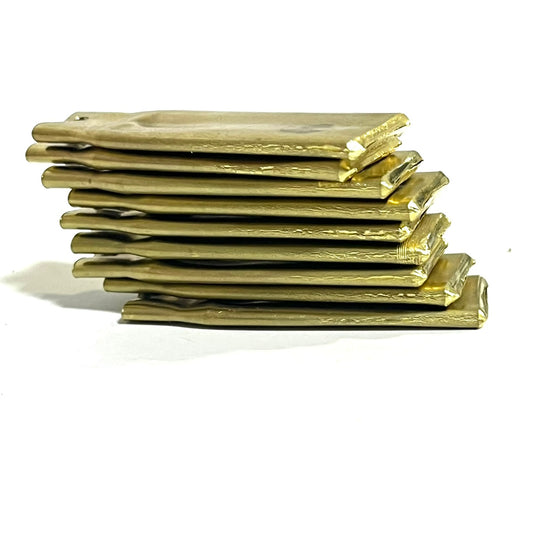
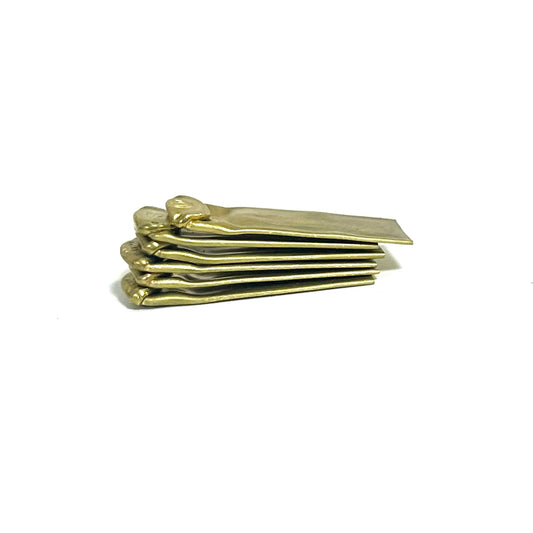
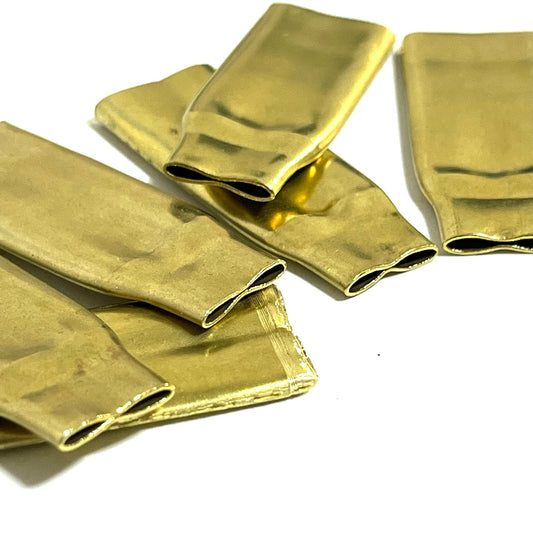
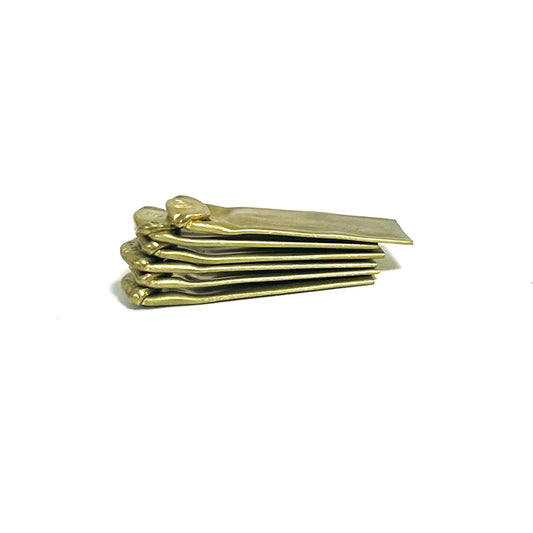
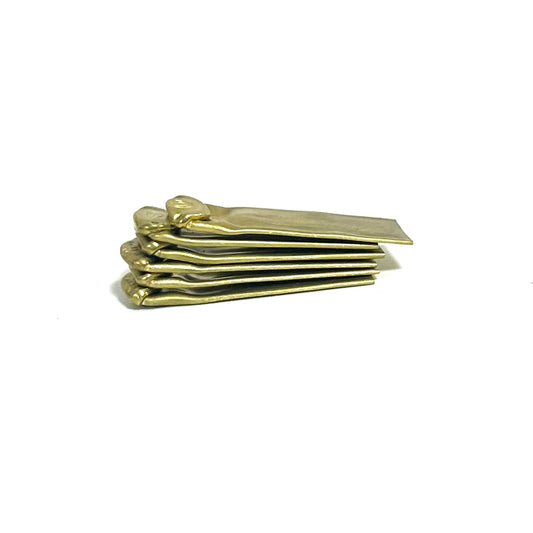
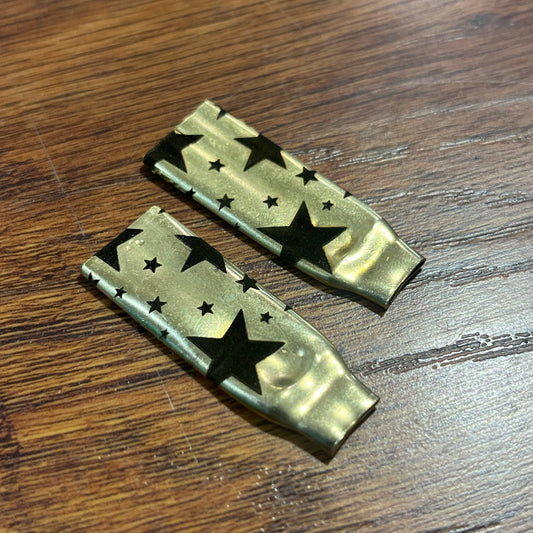
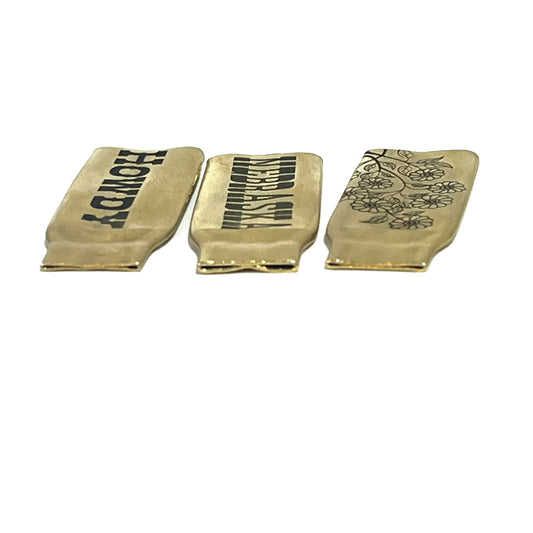
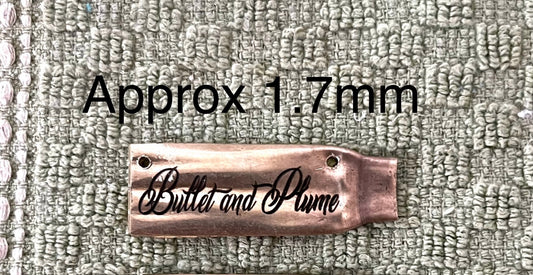
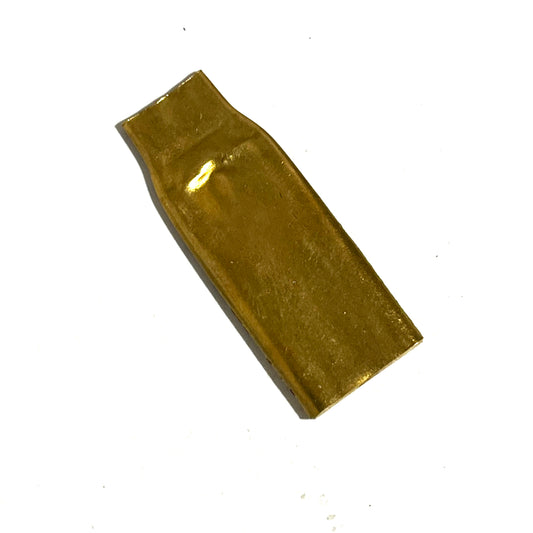
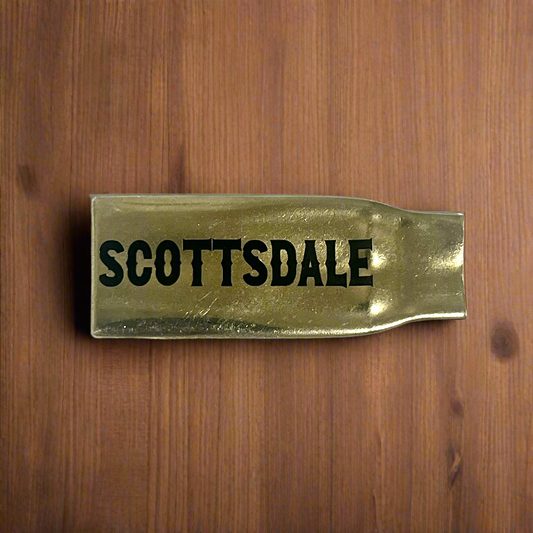
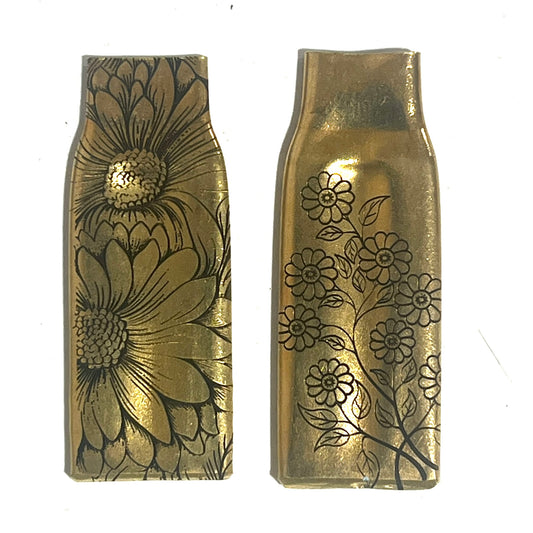
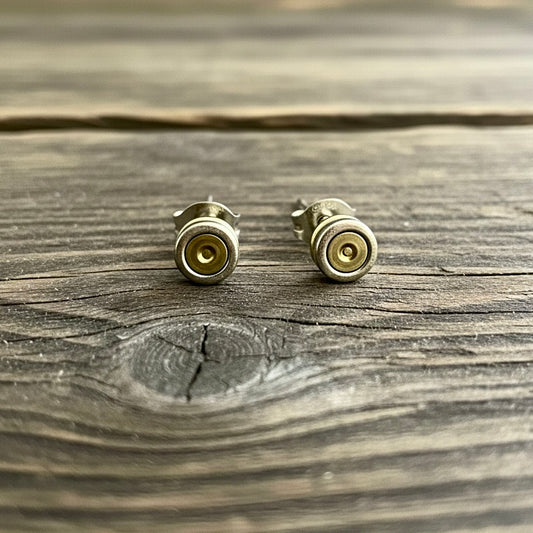
What calibers are available? Browse the collection — we carry multiple calibers including 9mm, .45 ACP, .223/5.56, .308, and shotgun shell slices. Each caliber produces a different blank size — 9mm is small and delicate, .308 is large and substantial.
Is bullet brass harder to stamp than craft store blanks? Bullet brass stamps beautifully — it simply requires a slightly more decisive strike than the softer metals most beginners start with. Here’s where it falls in the hardness spectrum:
-
Aluminum — softest common stamping metal; leaves deep impressions with minimal force
-
Copper — highly malleable; the standard baseline metal for beginners
-
Pewter / Alkeme — engineered specifically for effortless, light-tap stamping
-
Sterling Silver — softer and more forgiving than brass
-
Cartridge Brass — firmer than all of the above, but still a relatively soft, workable metal
Cartridge brass is a copper-zinc alloy that becomes slightly work-hardened during the manufacturing and firing process. The result is a blank that holds impressions exceptionally well once struck — deeper, crisper, and more durable than softer metals. A steel bench block underneath the blank and a single confident hammer strike is all it takes. If you’re used to stamping copper, just hit a little harder and you’ll get excellent results.
Are these compatible with ImpressArt stamps? Yes — ImpressArt letter and design stamps work on these blanks. Use a steel bench block, position the stamp carefully, and strike with a single firm blow. For larger stamps with more surface area, you may need to rock and re-strike to get full impression depth across the design.
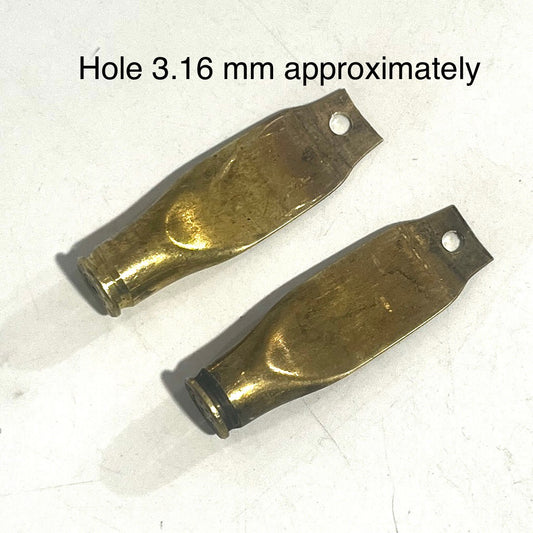
Do you offer pre-drilled options? Yes — several listings include a pre-drilled hole for jump rings, cord, and chain. Check individual listings for availability.
What’s the difference between stamping, engraving, and etching on these blanks? Stamping uses a steel punch and hammer to press a design into the brass surface — fast, no chemicals, beginner-friendly. Engraving uses a graver or rotary tool to cut the design — more detail possible, steeper learning curve. Etching uses ferric chloride or salt-water electrolysis to chemically remove brass in a pattern — great for fine line work and tonal designs. All three techniques work on these blanks.